How to choose a dog raincoat
Updated October 5, 2026
Choose a dog raincoat by how much of your dog it needs to keep dry. A cape covers the back for short walks in light rain, while a four-leg suit also covers the belly and legs, which matters for long coats and short legs. Size it by back length and chest girth, pick a water-repellent outer fabric rather than fleece, and look for reflective trim for dark, rainy walks.
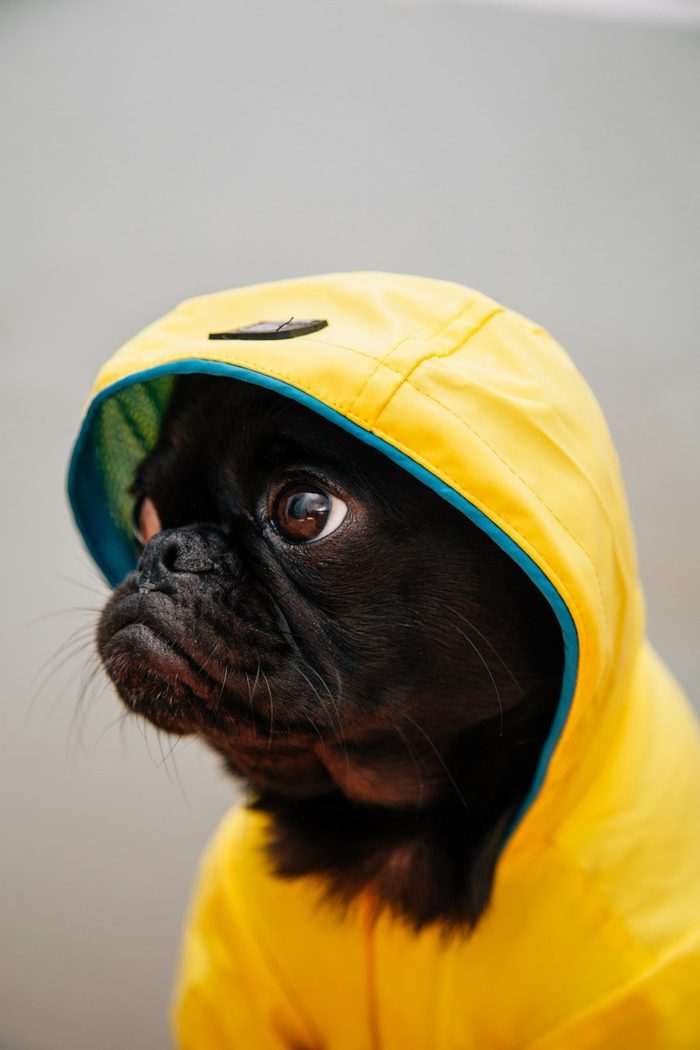
Cape, coat or four-leg suit?
Dog raincoats come in three main cuts. The right one depends on your dog's coat, its legs and how long you walk in the rain.
| Style | Covers | Good for | Trade-off |
|---|---|---|---|
| Cape or poncho | Back and sides, fastened at the neck and chest | Short walks, light rain, dogs that refuse leg holes | Belly and legs stay wet, and wind can lift it |
| Coat with front leg holes | Back, chest and the front of the belly | Most daily walks in steady rain | Back legs and the rear of the belly still get wet |
| Four-leg suit | Body, belly and all four legs | Long or white coats, short legs, muddy routes | Slower to put on, warmer, needs careful sizing |
Dachshunds, corgis and other short-legged dogs splash their bellies in every puddle, so belly coverage matters more for them than extra length. The dachshund size guide covers fitting a long back.
Features worth checking
- Choose a water-repellent outer fabric such as polyester. AKC advises against fleece or flannel on the outside, because those fabrics do not shed water.
- Look for a nylon lining, which dries faster than an absorbent one if you walk twice a day.
- A hood keeps rain out of the ears, which AKC says helps prevent ear infections. A detachable hood can come off in light rain.
- Reflective trim helps drivers see your dog, and rainy walks are often dark ones.
- Hook-and-loop straps are quick, while plastic buckles hold more firmly on a dog that pulls.
- A slot on the back lets you clip the leash to a harness worn underneath.
How to size a raincoat
Measure three things with a soft tape. Back length decides how much of the rump stays dry, so measure along the backbone, collar to tail. Chest girth, taken around the ribcage just behind the front legs, decides whether the coat closes, and neck girth is taken where the collar rests. A coat that is too loose lets rain run inside, and one that is too tight restricts movement and puts a dog off wearing it again.
Once it is on, AKC's check is that two fingers slide under each strap, and more than three means it is too loose. Weight-based sizes are only a rough guide; AKC's example is that a 30 lb (14 kg) French bulldog and a 30 lb basset hound need very different coats. The dog clothes size guide covers each measurement step by step.
Rain boots or a towel for the paws
Boots keep paws clean and dry. AKC notes that boots with deep-grooved soles help on wet, slippery pavement and can help prevent fungal infections between the toe pads. Expect a few short practice sessions indoors before your dog walks normally in them. If your dog refuses boots, towel the paws and the gaps between the pads after every walk instead.
After the walk, dry the dog and the coat
A raincoat keeps most of the water out, not all of it. Towel the neck, belly and legs, where water runs in, and dry thick or long coats down to the skin. AKC suggests microfiber towels, and a towel or a blow dryer for a dog that comes in wet on a cold day. Hang the raincoat inside out to dry, and wash it by its label, since some need a gentle cycle or cold water.
Hairless and thin-coated dogs gain the most from staying dry. AKC notes that rain on bare skin can lead to bacterial and fungal growth and skin inflammation.
Warm rain or cold rain
In warm summer rain, a light unlined shell or a cape keeps your dog dry without trapping heat, while a sealed four-leg suit can feel muggy. Cold rain is different. The AVMA notes that a soaked sweater or coat can chill a dog further, so choose a lined, water-repellent coat for cold, wet days and keep a dry spare. For freezing weather, see the winter coat guide.
Picks from the Pawlooks catalog
 Illustration
 Illustration
 Illustration
 Illustration
 Illustration
 Illustration
Prices and sizes change. Check the listing before you order.
Want to compare a cape with a four-leg suit before you buy? Upload one picture and Pawlooks dresses your dog in each, choosing the size from every product's own chart. Entering your dog's weight tightens the match. Looks are AI visualizations, so read the listing's size chart before you order.
Frequently asked questions
Does my dog need a raincoat?
Many dogs are fine with a good towel afterward. A raincoat helps most for dogs that chill easily, such as small, thin-coated, senior and hairless dogs, for long or white coats that take hours to dry, and for dogs that walk in the rain every day.
Should a dog raincoat have a hood?
A hood keeps water out of the ears, and AKC points out that floppy ears trap moisture, which raises the chance of ear infections. Pick a hood that stays clear of the eyes, or a detachable one if your dog dislikes it.
How do I get my dog used to a raincoat?
Start indoors on a dry day. Let your dog sniff the coat and reward it, then put the coat on for a few minutes at a time with treats or play before the first rainy walk.
Can a dog wear a raincoat over a harness?
Yes. Put the harness on first, then a raincoat with a leash slot on the back, and check after the first walk that no strap or buckle rubs under the coat.