Dog Halloween costumes: how to choose one your dog will wear
Updated October 5, 2026
The easiest Halloween costume for most dogs is a bandana, a cape or a hat, and full-body costumes suit dogs that already wear clothes calmly. Whatever you pick should let your dog see, hear, breathe, bark and walk normally, with no small parts to chew off. Practice at home in the days before, and take the costume off if your dog freezes, tucks its tail or paws at it.
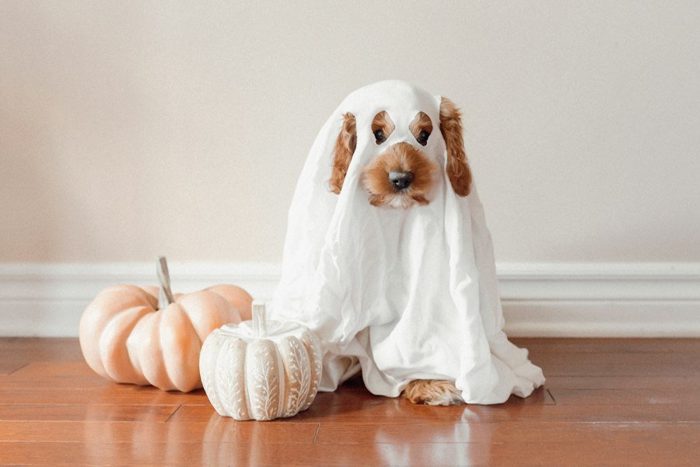
Which costume type suits your dog
Dog costumes come in four basic shapes, from a bandana around the neck to a full suit with legs and a hood. Start with the lightest one your dog accepts, and move up only while it stays relaxed.
| Type | Covers | Suits | Check |
|---|---|---|---|
| Bandana | Neck | Any dog, even one that dislikes clothes | Two fingers fit under the knot |
| Cape | Neck and back | Dogs that accept a collar but not leg holes | Too short for the back legs to step on |
| Hat or headband | Head | Calm dogs, for a few photos | Elastic behind the jaw, brim clear of the eyes |
| Full costume | Body, often legs and a hood | Dogs that already wear clothes calmly | Fits the chest and back length, leaves eyes and ears free |
Dressing a cat as well? See the cat clothes and accessories guide.
Can your dog see, hear, breathe and walk in it?
The AVMA says a pet costume should fit comfortably and leave sight, hearing, breathing, the mouth and movement free, and the ASPCA adds barking to that list. Check each point with the costume on:
- The hood, mask or brim stays clear of the eyes when your dog turns its head.
- Nothing presses the ears flat or covers them.
- Nothing wraps the muzzle or squeezes the throat, so your dog can pant, drink and bark.
- Your dog can walk, sit, lie down and stand up without the costume twisting.
- Two fingers slide under every strap, and no red marks show after a few minutes.
Small parts your dog can chew off
AKC's veterinary advice names beads, buttons, ribbons, snaps and elastic as costume parts that can choke a dog or block its intestines, and glitter and dyes can harm a dog that eats them. Pull on every decoration before the first try-on and cut off anything that moves. Keep your own costume pieces and glow sticks out of reach too.
Practice in the days before Halloween
A costume that first appears on the night itself, with the doorbell ringing and strangers in masks, is the hardest way to start. AKC suggests short sessions in the days before, with high-value treats:
- Leave the costume on the floor and reward sniffing.
- Drape it over your dog's back for a few seconds, then treat and remove it.
- Fasten it for a minute or two with treats and play, and take it off while your dog is calm.
- Add a few minutes a day, with a short walk around the house.
- On the night, keep it on just for photos or a short outing.
Stress signs that mean the costume comes off
Take the costume off at any of these signs of anxiety or discomfort from AKC's lists:
- A tucked tail, or ears pulled back and flattened
- Shaking, cowering or moving in slow motion
- Yawning, lip licking or panting when the room is not warm
- Freezing in place or refusing to move
- Pawing at the costume or trying again and again to get it off
- Refusing a treat it would normally take
A dog that shows them can still join in with a bandana or a seasonal collar. Never leave a costumed dog alone, since a costume can twist, snag or get chewed when nobody is watching.
On Halloween night
- Keep a nervous dog in a quiet room away from the front door during trick-or-treating.
- Make sure the ID tag still shows, in case your dog slips out an open door.
- After dark, use a reflective collar or leash and keep your dog leashed.
- Keep candy out of reach. Chocolate, raisins and xylitol, a sweetener in many sugar-free candies and gums, are toxic to dogs.
- Place lit jack-o'-lanterns and candles where a wagging tail or a trailing cape cannot knock them over.
Getting the size right
Size a full costume by chest girth first and back length second, and treat weight as a rough guide. New to measuring? Start with the dog clothes size guide. Capes and bandanas mostly tie at the neck, and many hats are one size with an elastic strap.
Picks from the Pawlooks catalog
 Illustration
 Illustration
 Illustration
 Illustration
 Illustration
 Illustration
Prices and sizes change. Check the listing before you order.
Torn between a cape and a full costume? Pawlooks puts each one on a photo of your own dog and checks the product's size chart against the size it estimates from the photo. The first preview is free. The picture is an AI edit, not a fitting, so confirm the size on the listing before ordering.
Frequently asked questions
Do dogs mind wearing Halloween costumes?
Some dogs ignore them and some find them stressful, which is why the ASPCA advises a costume only for a pet you know enjoys it. If you see a tucked tail, flattened ears, freezing or pawing at the fabric, switch to a bandana.
How long can a dog wear a Halloween costume?
Long enough for photos or a short outing. Costumes trap body heat, so take it off sooner in a warm room, on a warm evening or on a flat-faced dog, and right away if your dog starts panting.
What can a dog wear for Halloween if it hates clothes?
A bandana, a seasonal collar or a light cape gives a Halloween look with nothing over the head or around the legs. Introduce it with treats in short sessions, the same way as a full costume.
Should my dog wear its costume while we trick-or-treat?
Only if it has practiced in the costume and stays calm around strangers, masks and doorbells. Keep the costume light, add a reflective collar or leash after dark, and leave an anxious dog at home in a quiet room.