 pawlooks
How old is my dog or cat in human years?
Updated
Not 7 human years per year. A dog's or cat's first year equals about 15 human years, and the second adds about 9, so a 2-year-old is about 24. After that, cats and small dogs add about 4 human years a year, medium dogs 4 to 5, large dogs 5 to 6, and giant dogs 7 to 8.

Dog years to human years chart
Bigger dogs age faster after the second year. These are rule-of-thumb estimates from veterinary sources, not a medical age. Your vet can tell you more about your own dog.
| Dog age | Small | Medium | Large | Giant |
|---|---|---|---|---|
| 1 year | 15 | 15 | 15 | 15 |
| 2 years | 24 | 24 | 24 | 24 |
| 3 years | 28 | 28–29 | 29–30 | 31–32 |
| 5 years | 36 | 36–39 | 39–42 | 45–48 |
| 7 years | 44 | 44–49 | 49–54 | 59–64 |
| 10 years | 56 | 56–64 | 64–72 | 80–88 |
| 13 years | 68 | 68–79 | 79–90 | — |
| 15 years | 76 | 76–89 | 89–102 | — |
Giant breeds rarely reach 13, so the chart stops there for them.
Cat years to human years chart
| Cat age | Human years |
|---|---|
| 1 year | 15 |
| 2 years | 24 |
| 5 years | 36 |
| 7 years | 44 |
| 10 years | 56 |
| 11 years | 60 |
| 15 years | 76 |
| 18 years | 88 |
| 20 years | 96 |
Veterinary guidelines group cats into life stages: kitten from birth to 1 year, young adult from 1 to 6, mature adult from 7 to 10, and senior from 10 years on.
Why the "multiply by 7" rule is wrong
The 7-to-1 rule has been around since the 1950s. It came from people living to about 70 and dogs to about 10. But pets grow up much faster at the start: a 1-year-old dog or cat is closer to a teenager than to a 7-year-old child, and the pace slows after that.
What the DNA study says
Researchers at UC San Diego compared DNA changes in 104 Labrador Retrievers with those in people and proposed: human age = 16 × ln(dog age) + 31. By that formula a 2-year-old Lab is about 42 and a 10-year-old about 68. It was based on one breed, so it may not fit every dog.
When is a dog a senior?
Dogs are often considered seniors at about 75% of their expected lifespan, so large and giant breeds reach their senior years earlier than small ones. An 11-year-old Chihuahua is just entering its senior years, while many 11-year-old Great Danes have passed their typical lifespan.
Keep their photos by their real age
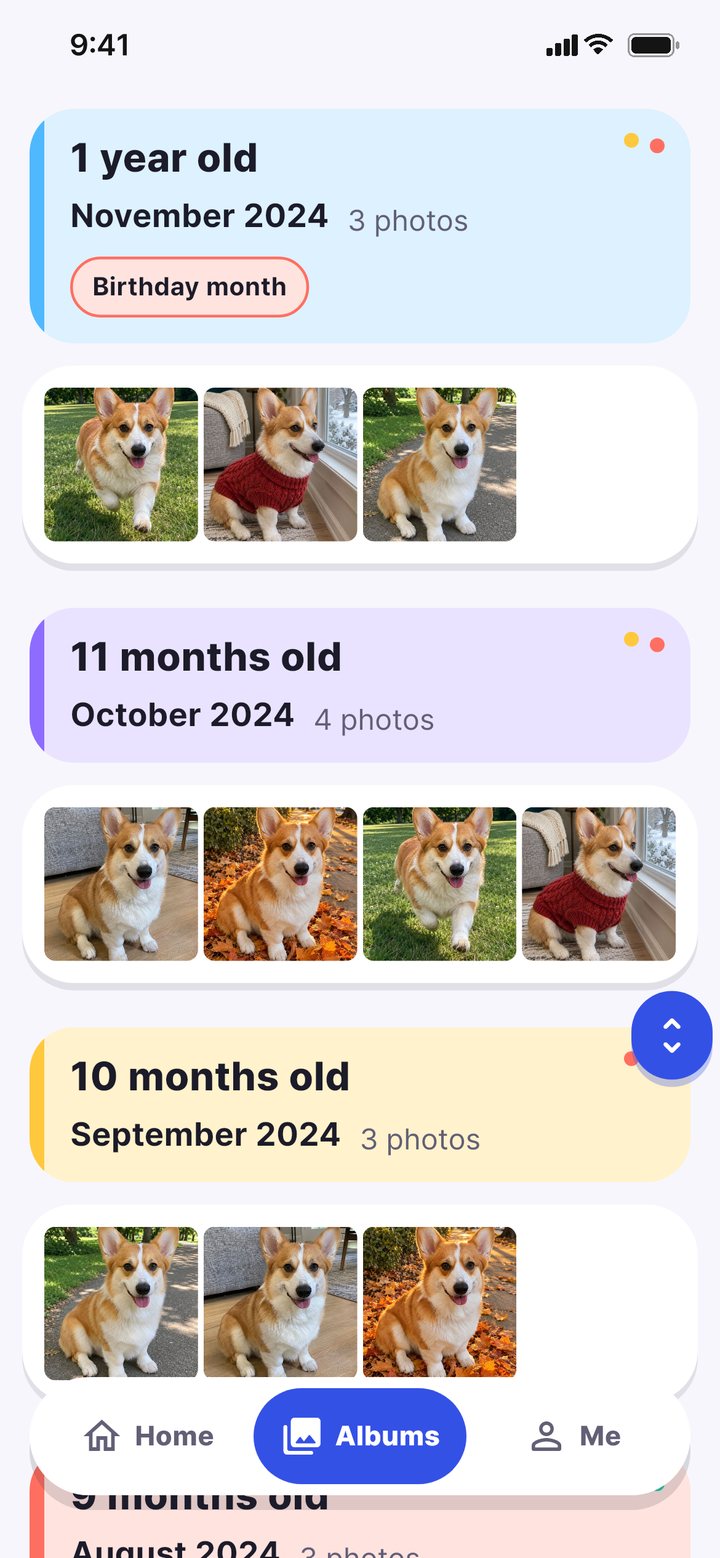
Whatever the human-year number, the age you remember is the real one: 2 months, 1 year, 5 years. pawlooks finds your dog and cat photos in your camera roll on your phone and binds them by your pet's age in months and years, counted from the birthday. If you don't know the birthday, a rough guess is fine.
Sources
- American Kennel Club (AKC), "How to Calculate Dog Years to Human Years" (rule of thumb attributed to the AVMA, the 7-year myth, the UC San Diego formula).
- PetMD, "How Old Is My Dog in Human Years?" (yearly pace by size, senior at about 75% of life expectancy).
- PetMD, "How Old Is My Cat in Human Years?" (15 and 24 human years, then about 4 a year).
- AAHA/AAFP Feline Life Stage Guidelines, 2021 (kitten, young adult, mature adult, senior).
How it looks in pawlooks
FAQ
Is one dog year really 7 human years?
No. The first year is about 15 human years and the second adds about 9. After that, each year adds about 4 to 8 human years depending on size.
How old is a 10-year-old dog in human years?
About 56 for a small dog, 56 to 64 for a medium dog, 64 to 72 for a large dog, and 80 to 88 for a giant breed.
How old is a 10-year-old cat in human years?
About 56. Cats reach 15 human years in their first year and 24 by their second, then add about 4 a year.
How old is a 1-year-old dog in human years?
About 15, like a teenager. By 2 years old a dog is about 24.